https://www.aevening.com/kyrie-irving-the-complexity-of-leadership-loyalty-and-legacy/
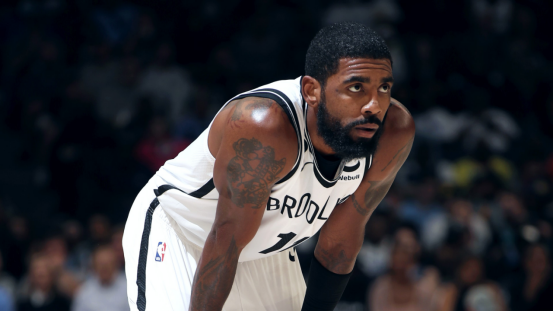
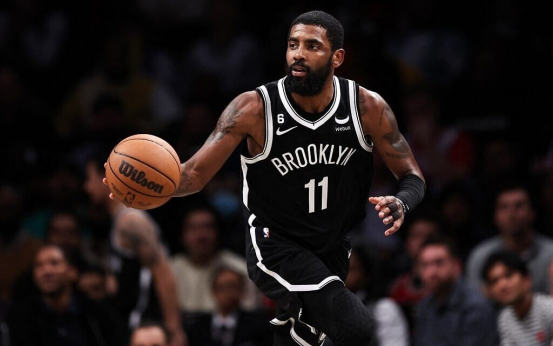
Irving’s style of play is so gorgeous that watching his highlights is simply art – those butterfly-like dribbling, incredible pull-ups, and difficult rebounds, any clip can make fans climax. But the question is: Why can’t he lead the team with such strong personal ability?
1. The technology is gorgeous, but the efficiency is questionable
Jordan once said that the real killer moves are often the simplest. Irving’s problem is that his skills are too complicated.
The more moves you make, the greater the risk : in a confrontation at the NBA level, every extra move you make increases the possibility of being intercepted, injured, or physically exhausted.
Limited physical talent : With a height of 1.88 meters and a not-so-outstanding wingspan, in the NBA where tall people are so many, his finishing efficiency is destined to be lower than those monsters who can directly crush the defense (such as Wade and Westbrook in their prime).
Physical consumption : Under the high-intensity confrontation of 82 regular season games + playoffs, Irving’s playing style is bound to make him more prone to fatigue and injury.
2. An assassin, but not a leader
Irving’s one-on-one ability is among the best in history, but basketball is a sport for five people.
Average organizational ability : He is more like a “scorer” rather than a “point guard”, averaging only 5.7 assists per game in his career, far less than traditional point guards (such as Paul and Nash).
Difficult to improve teammates : Although Durant’s ability to lead a team has also been questioned, at least his height and wingspan allow him to play one-on-one. What about Irving? If his teammates are not good enough, it is difficult for him to bring the team to a higher level with his personal ability.
“The team lost, but I didn’t” : His playing style easily leads to the situation where “personal data is good, but the team can’t win the game.”
3. Locker room bomb? Personality determines the limit
Irving’s career has been filled with controversy:
Leaving the Cavaliers
During the Celtics period, it was revealed that he “destroyed the chemistry”
“Part-time playing” and anti-Semitism during the Nets period
The Mavericks have yet to prove that they can lead the team stably
A true leader needs to convince his teammates, but Irving’s personality is more like a “lone ranger” (literally) rather than the core of locker room cohesion.
4. New challenges after returning from injury
After this reimbursement, Irving must face:
3 The double pressure of 3 years old + accumulated injuries
Mavericks’ expectations for Anthony Davis
Must transform to a more efficient style of play
5. Future Positioning: Top Deputy
Irving’s best role is:
Second in command of a championship-contending team (e.g., 2016 Cavaliers)
The core scoring point in the system (such as the current Mavericks)
Rather than a single-core leader
Conclusion:
Irving is like a peerless sword, extremely sharp but needs someone to control it. After returning from injury, he must prove that he can still play the role of “super assistant”, otherwise he may fade out of the ranks of first-tier stars. For fans who like him, they hope to see him return healthy and continue to show those amazing basketball arts in a suitable system. After all, the NBA needs such a unique player, but the premise is that he must find the right position.
https://www.aevening.com/kyrie-irving-the-complexity-of-leadership-loyalty-and-legacy/